

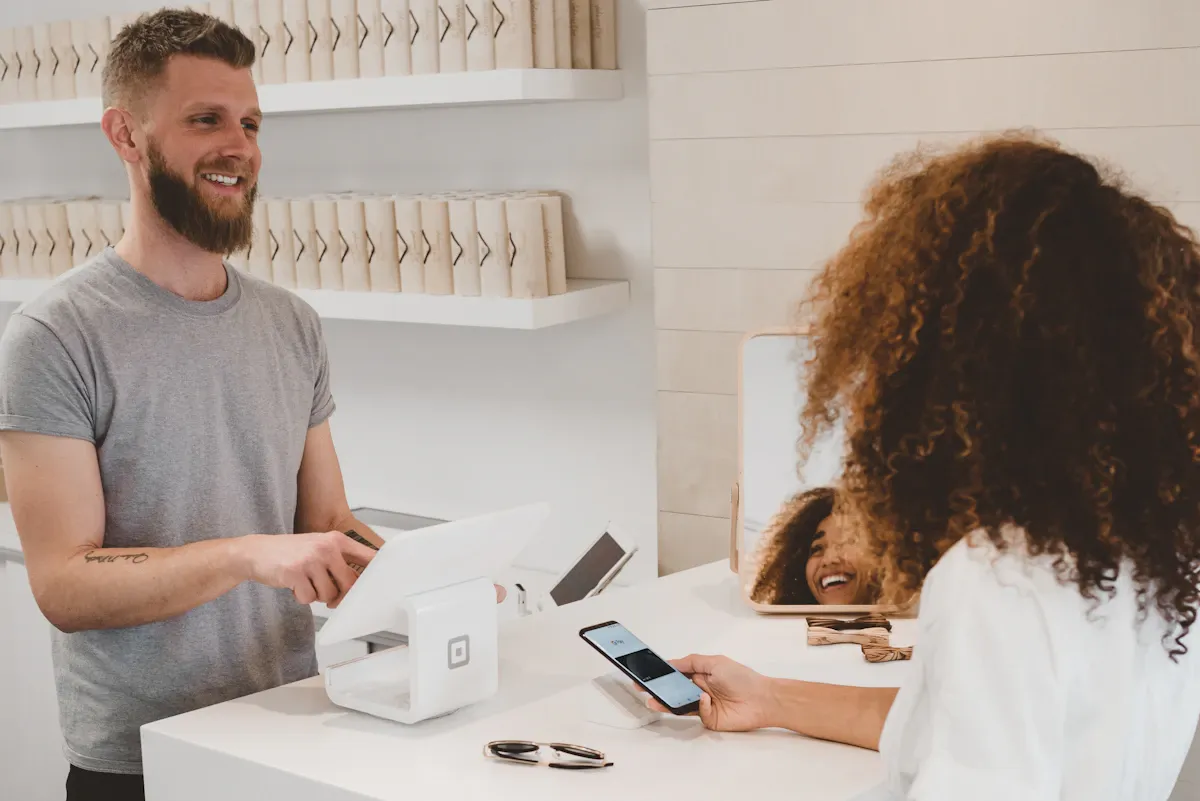
Buyers in their twenties who have doubts almost never ask. They open your tagged photos, read the comments and leave without a trace. With Sumpah Pemuda (the Youth Pledge) on October 28,1 plenty of brands will be making content for young people. Before you join in, look at your own shop the way they will. The trust signals for online stores that count most with this crowd start with what they see when they land on your Instagram account or Shopee store.
Their suspicion is fair. Gen Z buyers, now in their late teens to late twenties, have heard plenty of stories about shops that vanished once the transfer went through. So before buying from a brand they don’t know, they investigate. It’s quick, and it almost never happens in your DMs.
If you’re just starting out, nobody can tell your budget from their screen. What they can see is whether a real person runs the shop. Below are the 7 things they check most, on your Instagram feed, Shopee store, WhatsApp catalog or link in bio, each with a fix you can do from your phone this weekend.
Quick Summary
- Young buyers with doubts check, then leave. The proof has to be in place before they arrive.
- The seven things they check most: real photos and customer photos, reviews they can click, a return rule, chat reply hours, signs the account is alive, open pricing, and the owner’s face.
- Almost all of it costs Rp 0, apart from a few sample products.
- Fix open pricing and reply hours today. Send the customer photo request now too, since those take a week or two to come in.
How Gen Z Buyers Decide If a Small Online Store Looks Legit
In our work with small brands, the sequence tends to look the same. They see one post and open your profile. They scroll the feed. They open the tagged photos tab. They read the comments, not the caption. Sometimes they search your brand name on TikTok with “review” after it. Last, they check the price plus shipping.
If anything feels off, they won’t DM you to confirm. They close the app and keep scrolling.
So your product page has to answer their doubts without you. If you run a service or booking website, our 7 trust signals your website must have is the better fit. This piece is narrower: seven points on the accounts you actually sell from (Instagram, Shopee, your WhatsApp catalog), the red flag for each, and how to patch it.
Trust Signals for Online Stores: The 7-Point Checklist
Copy this into your phone notes. Score each point: 0 if it’s missing, 1 if it’s half done, 2 if it’s done. The maximum is 14.
| No | What the buyer checks | Red flag in their eyes | Quick fix | Cost |
|---|---|---|---|---|
| 1 | Real photos and customer photos | Every photo is too polished, “tagged” tab is empty | 5 phone photos by a window + ask 3 customers for an unboxing video | Rp 0 to the cost of 3 products |
| 2 | Reviews they can verify | Only chat screenshots, all 5 stars | Link your Shopee or Google reviews in your bio and highlights | Rp 0 |
| 3 | Return or exchange rule | Nothing, or “no returns once purchased” | Write a 3-line rule, put it in a highlight and the product description | Rp 0 |
| 4 | Chat reply hours | No info, DMs read but not answered | Set a greeting message and business hours in WhatsApp Business | Rp 0 |
| 5 | The account is alive | Last post two months ago, comments turned off | Pin 3 best posts, post at least once a week, reply to comments | Rp 0 |
| 6 | Open pricing | ”DM for price”, surprise shipping cost at the end | Write prices in captions and the catalog, give a shipping range | Rp 0 |
| 7 | The owner’s face | No name, no person, no city | One 30-second intro Reel + an “About Us” highlight | Rp 0 |
0–6: many interested people are leaving before they ask. 7–11: the foundation is there, but it leaks. 12–14: trust isn’t your problem, so if sales are slow, look at your reach or offer.
1. Real Photos, and Photos From Customers
Catalog shots that look too perfect can look lifted from another shop. Young buyers want the product in an ordinary person’s hands.
Quick fix: take five photos on your phone near a window, in daylight. One of the product in a hand, one next to something that shows size (a glass, a phone, a coin), one close-up of the texture, one of the packaging, one of it in use. Then message your first three customers:
Hi [name], thanks so much for buying [product]!
Here's a Rp 10,000 voucher for your next order.
Code: [CODE], valid until [date],
whether or not you post anything.
If you're up for it, could you record a 15-second
unboxing video or snap a photo while you're using it,
and tag @[account] in a story or post? I'll repost it
with your permission. No pressure at all if you're busy.
The voucher goes to everyone who bought, whether they post or not. Never trade it for 5 stars on Shopee or Google.
If you don’t have customers yet, give the product to three friends and ask them to say openly that they got it free. “Tried by my friend” still beats a made-up testimonial. For small creators, see our micro-influencer brief template.
To repost, ask the customer for the file, upload it as a new post or Reel, then on the final screen tap Tag people > Invite collaborator and choose their account (if your account is still private, switch it to public first; private accounts can only invite their followers). Once they accept, the post shows on both profiles.2 That’s stronger than a story screenshot, because buyers can tap through to a real customer’s profile.
2. Reviews With a Source They Can Click
Young buyers know a chat screenshot takes a minute to fake. They trust reviews they can open themselves: your Shopee or Tokopedia rating, Google reviews, or a customer’s own post.
Quick fix: if you have a marketplace store, put the store link in your bio, then create a highlight called “Reviews”. Each story shows a screenshot of one review, with a Link sticker to your store page or its ratings section so buyers can check it themselves. If you keep using chat screenshots, blur the customer’s name and number. Names and phone numbers count as personal data under Indonesia’s Personal Data Protection Law (UU PDP), so ask permission before you post them.3
Don’t panic over a single 3-star review. A wall of perfect scores looks staged, as we explain in why perfect 5-star reviews look suspicious. What buyers watch is how you reply. And never buy reviews. Google prohibits fake and incentivized reviews and can remove them.4
3. A Return Rule, in Writing
Many first-time founders skip a return rule, afraid people will abuse it. In practice, having no written rule is what gets you taken advantage of: every complaint becomes a one-on-one negotiation in chat.
That blanket “no returns once purchased” line has a legal problem too. Article 18(1)(b) of Indonesia’s Consumer Protection Law prohibits standard clauses stating that the seller may refuse to take back goods the consumer bought.5 It scares buyers off, and it won’t hold up if there’s ever a dispute. You’re better off writing down when an item can be exchanged.
A template you can copy straight away:
EXCHANGE POLICY
1. Item damaged or wrong item sent? We replace it free,
   shipping included.
2. What we need: an uncut unboxing video sent to our
   WhatsApp within 48 hours of receiving the package.
3. Picked the wrong color or size? You can exchange
   once, buyer covers shipping.
Adjust point 3 to fit your product. For opened food or skincare, it’s reasonable to refuse change-of-mind exchanges, as long as damaged or wrong items are still replaced and you explain why up front. Put this rule in an Instagram highlight, your marketplace product description and your WhatsApp catalog.
Note: on Shopee or Tokopedia, return requests still follow the platform’s rules. Your rule applies fully to WhatsApp and Instagram orders; on marketplaces it tells buyers what you’ll cover.
4. Clear Chat Reply Hours
“Read, no reply” is one of the fastest ways to lose someone who was about to pay a new shop. You don’t need to be online all day. Just tell people when you’ll answer.
Quick fix in WhatsApp Business: go to Settings > Business tools. Turn on Greeting message and Away message, then fill in your Business hours in the Business profile (menu names can differ slightly between app versions).6 Example greeting:
Hi, thanks for messaging [brand name]!
The admin (that's me, [first name]) replies every day
between 9 am and 9 pm (WIB), usually within an hour.
While you wait, the full catalog and prices are here:
[catalog link]
Put the same hours in your Instagram bio. “Replies within 1 hour” that you actually keep beats a “fast response” that means three hours. Once chats pile up, our guide to using WhatsApp Business as a CRM shows how to sort them with labels.
5. Signs the Account Is Still Alive
Young buyers check the date of your last post. An account that’s been quiet for two months looks closed or, worse, sold to someone else.
Quick fix: pin three posts to the top of your profile (your best seller, a customer photo, an intro from the owner). Post once a week. That’s enough. And reply to comments, including the ones that just say “price?”. Answer with the actual price, not “check your DM”.
Don’t buy followers. 5,000 followers with 3 likes per post looks far more suspicious than 300 followers who actually comment.
6. Prices Out in the Open
“DM for price” fills your inbox, but young buyers read it as a price that depends on who’s asking. Many never DM at all.
Quick fix: write the price in the caption, your WhatsApp catalog and your link-in-bio page. Add a shipping range (for example, “shipping within the city is around Rp 10,000–15,000, to Greater Jakarta around Rp 20,000–25,000”) so there’s no surprise at checkout. For promos, show normal and promo prices side by side, and never raise the normal price the day before a sale. Buyers keep old screenshots.
7. The Owner’s Face (or at Least Hands)
For a brand nobody knows yet, one real face with a first name and a city is the strongest trust signal you can build for Rp 0.
A 30-second intro Reel script:
[0–5 sec]   "Hi, I'm [name], and I make [product] in
            [city]."
[5–15 sec]  "I started [brand] because [one honest
            sentence]."
[15–25 sec] Show the process: packing or mixing,
            whatever is real.
[25–30 sec] "If you have any questions, message me
            directly. I answer every chat myself."
If you’re not ready to be on camera, start with your hands packing an order and your voice. Save the video in an “About Us” highlight.
Example: Wangi Senja, Aromatherapy Candles in Yogyakarta
Nadia, 24, sells handmade aromatherapy candles alongside her office job. Each candle sells for Rp 89,000, with about Rp 32,000 in materials, so she keeps roughly Rp 57,000 per candle before other costs. She sells through Instagram and Shopee, with around 600 followers.
Her starting score was 5 out of 14: reviews 2 (she already had Shopee ratings), active account 2, reply hours 1, everything else 0. Canva mockups, no return rule, “DM for price” captions, no face, an empty tagged tab. In a typical week about 30 people messaged her, and roughly 4 bought. Put simply: out of every 10 people who asked, fewer than 2 paid.
What Nadia did over two weekends:
| Fix | Time | Cost |
|---|---|---|
| Prices + shipping range in captions and catalog | 30 minutes | Rp 0 |
| Greeting message + business hours in WhatsApp Business | 15 minutes | Rp 0 |
| Exchange rule (candles cracked in transit get replaced) | 20 minutes | Rp 0 |
| 5 phone photos by her bedroom window | 1 hour | Rp 0 |
| 3 candles for friends, asking for honest videos | 1 week | 3 × Rp 32,000 = Rp 96,000 |
| Intro Reel (hands pouring wax + her voice) | 1 hour | Rp 0 |
Total spend: Rp 96,000. Her score went up to 12: photos 1 (only three friend videos so far), returns 2, pricing 2, reply hours 2, face 1 (hands and voice only), reviews 2, active account 2.
Three weeks later, the price-only DMs had nearly vanished, but weekly DMs stayed around 25–30 because people now asked about scents and delivery. Orders went from about 4 to about 8 a week. Four extra sales a week × roughly Rp 57,000 = about Rp 228,000, so the Rp 96,000 came back within the first week. “Is this legit?” questions nearly disappeared from her inbox. On top of that, some buyers now check out straight on Shopee without messaging at all, and those sales aren’t counted above.
These numbers are an illustration and results vary. Notice that roughly the same number of people messaged Nadia; more of them just felt safe enough to pay.
One honest trade-off: this checklist can’t rescue a product nobody wants. If you score 12+ and sales are still slow, our guide to sales pages that actually convert helps you find the real problem.
Once This Checklist Is Done
These seven points work best when your account name and contact number match everywhere. A buyer who sees “Wangi Senja” on Instagram but “nadiacandle” on Shopee starts doubting again. Check that with the 7-touchpoint brand consistency audit, and rerun both checklists every three months or any time you change your number or prices.
If You Want a Fresh Pair of Eyes
Your own account is the hardest to judge. If you want a first-time buyer’s view of your sales page, or one simple page with your prices and return rule, the Eranya Digital team can help, starting with a relaxed chat. Book a free consultation here.
References
<script type="application/ld+json">
[
  {
    "@context": "https://schema.org",
    "@type": "Article",
    "headline": "Trust Signals for Online Stores: 7 Things Gen Z Checks First",
    "description": "Trust signals for online stores: the 7 things Gen Z checks before buying from a small brand, from real photos to return rules, with a cheap fix for each.",
    "image": "https://eranya.digital/images/blog/trust-signals.webp",
    "author": {"@type": "Organization", "name": "Eranya Digital", "url": "https://eranya.digital"},
    "publisher": {"@type": "Organization", "name": "PT Eranya Digital Nusantara", "logo": {"@type": "ImageObject", "url": "https://eranya.digital/images/logo.png"}},
    "datePublished": "2026-10-27",
    "dateModified": "2026-10-27",
    "mainEntityOfPage": {"@type": "WebPage", "@id": "https://eranya.digital/blog/gen-z-trust-signals-small-brand/"},
    "inLanguage": "en-US",
    "keywords": ["trust signals for online stores", "how to make a small online store look legit", "gen z trust signals", "how to build trust with online customers", "small business return policy template"],
    "articleSection": "Konversi"
  },
  {
    "@context": "https://schema.org",
    "@type": "FAQPage",
    "mainEntity": [
      {"@type": "Question", "name": "How do I make a small online store look trustworthy to new buyers?", "acceptedAnswer": {"@type": "Answer", "text": "Give buyers proof they can check themselves. Start with seven things: real product photos taken on a phone, reviews with a clickable source, a written return rule, clear chat reply hours, an account that looks active, prices written out in the open, and the owner's face. Most of it can be done in one weekend for Rp 0 to a few hundred thousand rupiah."}},
      {"@type": "Question", "name": "Do screenshot testimonials still work for small businesses?", "acceptedAnswer": {"@type": "Answer", "text": "Less and less, especially with younger buyers, because a screenshot is easy to fake and impossible to verify. You can still use them as a supporting piece, but pair them with proof people can click: marketplace ratings, Google reviews, or customer posts that tag your account. If you post screenshots, blur customer names and numbers, and ask permission first."}},
      {"@type": "Question", "name": "Does a small brand on a tight budget really need a return policy?", "acceptedAnswer": {"@type": "Answer", "text": "Yes, even a simple one. A return policy doesn't have to mean a refund for any reason. Just write down when an item can be exchanged (damaged or wrong item sent, for example), the time limit, and what proof you need (an unboxing video). A clear rule protects you from unreasonable complaints and makes buyers comfortable enough to transfer money."}},
      {"@type": "Question", "name": "Do I have to show my face on social media to sell online?", "acceptedAnswer": {"@type": "Answer", "text": "No, but it helps a lot when nobody knows your brand yet. Buyers relax when they can see a real person behind the account. If you're not comfortable on camera, start with your hands packing orders, your voice over a video, or one photo in an 'About Us' highlight with your first name and city."}}
    ]
  }
]
</script>
Footnotes
-
Presidential Decree of the Republic of Indonesia No. 316 of 1959 on National Days That Are Not Public Holidays (establishing October 28 as Sumpah Pemuda Day). JDIH of the Ministry of Marine Affairs and Fisheries: jdih.kkp.go.id/Homedev/DetailPeraturan/6384 ↩
-
Instagram Help Center. Collaborate with others on Instagram reels. help.instagram.com/3526836317546926 ↩
-
Law of the Republic of Indonesia No. 27 of 2022 on Personal Data Protection. peraturan.bpk.go.id/Details/229798/uu-no-27-tahun-2022 ↩
-
Google Maps User Contributed Content Policy. Fake engagement (prohibition of fake and incentivized reviews). support.google.com/contributionpolicy/answer/7400114 ↩
-
Law of the Republic of Indonesia No. 8 of 1999 on Consumer Protection, Article 18(1)(b) (prohibition of standard clauses stating that the business may refuse to take back goods the consumer bought). peraturan.bpk.go.id/Details/45288/uu-no-8-tahun-1999 ↩
-
WhatsApp Help Center. How to use greeting messages, faq.whatsapp.com/501866148528310, and How to use away messages, faq.whatsapp.com/2565868990219715. ↩
Questions About Earning Young Buyers' Trust
How do I make a small online store look trustworthy to new buyers?
Give buyers proof they can check themselves. Start with seven things: real product photos taken on a phone, reviews with a clickable source, a written return rule, clear chat reply hours, an account that looks active, prices written out in the open, and the owner's face. Most of it can be done in one weekend for Rp 0 to a few hundred thousand rupiah.
Do screenshot testimonials still work for small businesses?
Less and less, especially with younger buyers, because a screenshot is easy to fake and impossible to verify. You can still use them as a supporting piece, but pair them with proof people can click: marketplace ratings, Google reviews, or customer posts that tag your account. If you post screenshots, blur customer names and numbers, and ask permission first.
Does a small brand on a tight budget really need a return policy?
Yes, even a simple one. A return policy doesn't have to mean a refund for any reason. Just write down when an item can be exchanged (damaged or wrong item sent, for example), the time limit, and what proof you need (an unboxing video). A clear rule protects you from unreasonable complaints and makes buyers comfortable enough to transfer money.
Do I have to show my face on social media to sell online?
No, but it helps a lot when nobody knows your brand yet. Buyers relax when they can see a real person behind the account. If you're not comfortable on camera, start with your hands packing orders, your voice over a video, or one photo in an 'About Us' highlight with your first name and city.