

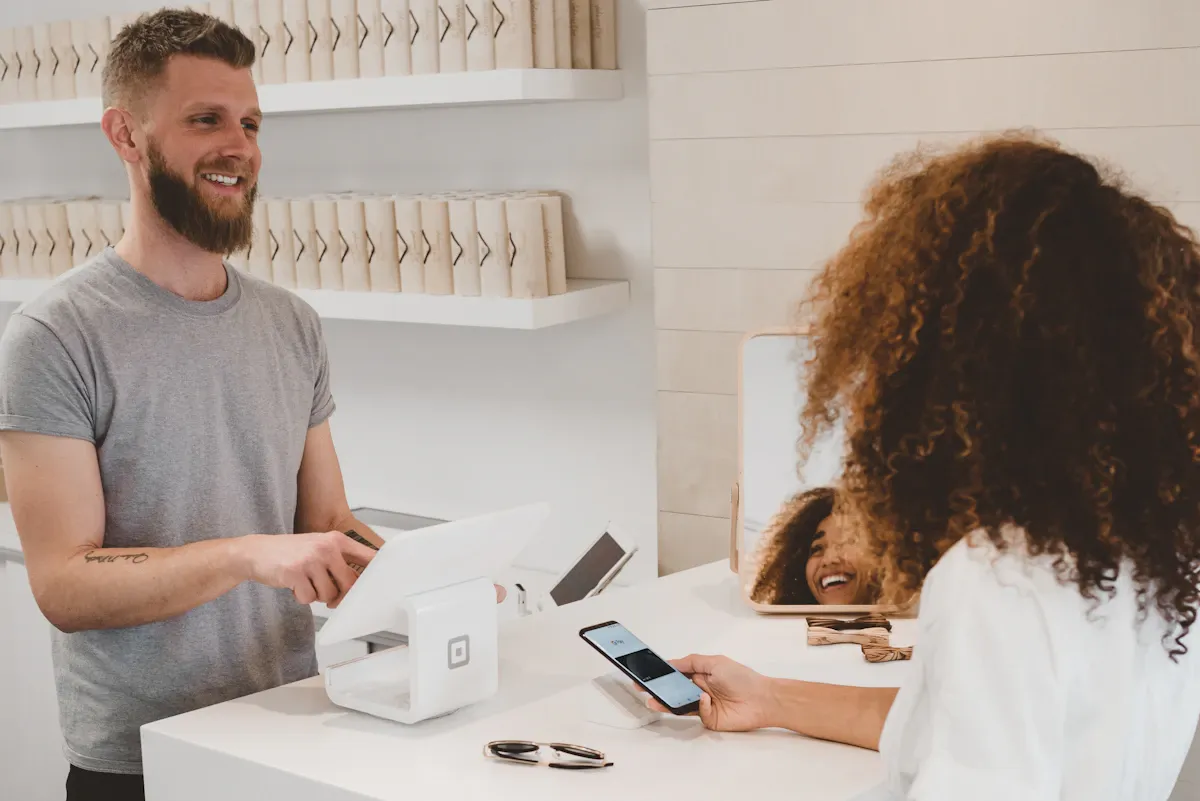
A woman in South Jakarta opens an Instagram shop at 9:14 a.m. By 9:16, she has closed the app. The shop did nothing technically wrong — the products looked good, the price seemed fair. But something in those 90 seconds was off. No real faces. Photos that looked pulled from a manufacturer’s catalog. A follower count of 312 with no named reviews anywhere. She moved on and bought from someone else.
This happens hundreds of times a day to small businesses across Indonesia. And it almost never comes down to the product.
The 90-Second Window Is Real
Research from the American Color Institute found that 62–90% of initial product assessments are made on color and visual impression alone, within seconds of exposure. Nielsen’s research adds that the brain processes images 60,000 times faster than text. Long before a buyer reads your description or checks your price, their brain has already completed its trust evaluation: is this a safe place to buy from, or not?
For small businesses without an established name, this window is the highest-stakes arena. Winning it does not mean the buyer immediately checks out — it means they do not leave. They scroll further. They read more. The door to conversion stays open.
This connects directly to what we covered earlier in this series: people buy on emotion, not logic. Trust is an emotional condition, not a calculated conclusion. Buyers do not weigh evidence first and then feel safe — they feel safe first, then they are willing to weigh the evidence.
What Actually Happens in Those 90 Seconds
Three layers of assessment happen almost simultaneously in the buyer’s brain:
Layer 1 — Visual (0–3 seconds): Does this look like a real business? Photo quality, color coherence, layout tidiness — these speak before a word is read. A blurry product photo against a cluttered background loses the evaluation before the buyer has consciously registered anything.
Layer 2 — Social proof (3–30 seconds): Who else has bought here? The brain searches for confirmation from other people. Ratings, number of sales, reviews, testimonials — these are not decoration. They answer the buyer’s silent question: Am I the only one naive enough to trust this?
Layer 3 — Human accountability (30–90 seconds): Is there a real person responsible for this? A founder photo, a short origin story, or even ‘run by Rina, based in Bekasi since 2022’ transforms an anonymous storefront into someone who can be held accountable.
All three layers need to clear before a buyer feels safe enough to ask about price — let alone pay.
4 Tactics You Can Apply This Week
1. Swap one catalog photo for a real one
Spiegel Research Center found that products with 5 or more reviews see a 270% higher likelihood of purchase compared to products with none — and a parallel effect applies to how photos are perceived. After years of receiving goods that looked nothing like their catalog images, Indonesian online buyers have learned to distrust perfection. An overly polished product photo no longer signals quality. It signals risk.
The fastest fix: photograph your product on your actual work table under natural window light. Add your hands, or show the product being used in a real context. Skip the white studio backdrop. That unpolished photo will outperform the glossy catalog image it replaces — because it looks like something a real person took, not something manufactured to deceive.
2. Replace vague testimonials with specific ones
‘Great product, highly recommended!’ does not move buyers. ‘My skin cleared up within two weeks and an old scar I’d had for years started fading’ — that does.
Audit what you have. Drop the generic ones. Ask your best customers to rewrite their reviews with specifics: what was their situation before, how long did they use it, what concrete change happened. One detailed testimonial beats ten empty praises. Place it directly next to your call to action — not buried on a separate page the buyer has to find.
A warung in Cibubur replaced its ‘Delicious Nasi Padang’ signboard with a quote from a real regular: ‘My go-to spot after the night shift — rice is always hot, portions are honest.’ Their lunch queue lengthened within a month. The customer’s words did what the owner’s claim never could.
3. Close the response gap
In Indonesia, a WhatsApp reply delay of more than an hour during active hours functions as a trust signal — a negative one. It is not about impatience. It is pattern recognition. Silence raises a specific question in the buyer’s mind: Is this shop still active? Should I look elsewhere?
Set an informative auto-reply that includes your actual response window and pre-answers the most common questions. If the same three questions appear in your chats daily, answer all three in the welcome message. This removes friction and tells the buyer that a real operation is running behind the account — before anyone has typed a manual reply.
4. Put a real face on your business
Edelman’s 2024 Trust Barometer found that trust in ‘a person like me’ is significantly higher than trust in anonymous institutions. For small businesses competing against larger brands, this is a structural advantage — one most owners never use.
One founder photo with a brief caption — name, city, why you started — shifts perception from ‘unknown shop’ to ‘accountable person’. Tokopedia sellers who add a real profile photo report higher conversion rates than those with a blank or logo-only profile. This costs nothing. Most small business owners skip it anyway.
The Mistake That Undoes All of It
The most common trust-building error: stacking claims without evidence. ‘100% trusted’, ‘guaranteed quality’, ‘best in Indonesia’ — these phrases do not build trust. They signal that you feel compelled to assert something you cannot prove. Buyers register this, consciously or not, as a red flag.
Trust does not come from what you say about yourself. It comes from what others say about you and what evidence buyers can see without your help. Claims are noise. Proof is signal.
The second error is just as costly: updating your product line while leaving your storefront visuals, profile, and highlights untouched. Buyers use consistency as a proxy for seriousness. A profile with the last post from six months ago, empty highlights, or an outdated photo tells buyers the owner is not serious enough about their own business to maintain it.
Credibility at Scale Needs More Than a Platform
Every tactic above works on Instagram, Tokopedia, or WhatsApp. But platform-only trust has a hard ceiling. You cannot control the layout. You cannot build a navigable portfolio. You have no permanent ‘about’ space that works while you sleep. And when the algorithm shifts or the platform throttles your reach, your credibility infrastructure does not come with you.
A website is not a replacement for the tactics above — it is the structure where all of them work together, consistently, around the clock. Every trust signal that is awkward to show on a social profile — certifications, a full process page, a case study, detailed service descriptions — can be built with precision on a website that loads in under two seconds and looks identical whether someone visits from Surabaya or Singapore.
If your business is growing and platform-only credibility is starting to show its limits, that is the signal to build something more permanent.
Want us to audit your current trust signals and tell you exactly what to fix first? Book a free consultation →
References
Building Buyer Trust — Practical Questions Answered
Why does trust form in 90 seconds rather than after reading all the information?
The brain processes visual information 60,000 times faster than text, according to Nielsen research. Before a buyer reads your product description, price, or reviews, their brain has already run a rapid pattern-matching check: does this look like a real business? Do other people trust it? Is there a real person behind it? This check happens in seconds, not minutes. The 90-second window is the gap between landing on your page and deciding whether to stay or leave — and most of that judgment rests on visual cues and social proof signals, not the written content. Practical implication: open your own storefront and time how long it takes before something feels 'off.' Whatever you find first is your highest-priority fix.
What trust signals work best for small businesses with no established reputation?
Three signals punch well above their weight when you have no established name. First, process transparency: showing your workspace, how you make or pack the product, or a behind-the-scenes video builds trust faster than a polished logo. Second, a personal founder story — your name, city, and one line on why you started — transforms an anonymous storefront into an accountable person. Third, a bold guarantee: 'not satisfied, full refund' shifts the risk from the buyer to you and dramatically lowers the barrier to a first purchase. Start with all three before spending anything on advertising. Each one costs nothing but deliberate effort.
How do I get strong testimonials when I'm just starting out?
Offer your product or service to 10 people in your closest network at cost or free, with one explicit ask: honest, detailed written feedback. Specific details convert better than flattery — 'I lost 4 kg in three weeks' outperforms 'highly recommended' by a wide margin. Once you have those first testimonials, place them directly next to your call to action, not buried on a separate reviews page. On a WhatsApp catalog, include a screenshot of one real customer message (with their permission). On Instagram, a saved Highlight titled 'Reviews' filled with real screenshots consistently outperforms a designed 'Testimonials' graphic — because screenshots look unedited and therefore more credible.
Is trust-building different in the Indonesian market compared to Western markets?
Yes, in several important ways. Indonesian buyers place unusually high weight on WhatsApp responsiveness — a reply delay of more than an hour during business hours reads as abandonment or a scam signal, not merely slow service. Social proof from people who look and sound like the buyer — same city, similar lifestyle — is more persuasive than celebrity endorsements. A physical location signal, even for fully online businesses, carries real trust weight: 'based in Tangerang Selatan' outperforms 'Indonesia-wide' in local trust building. And founder-face visibility matters more than brand anonymity: buyers want to know exactly who they are sending money to before completing a bank transfer — which remains the dominant payment method for peer-to-peer commerce.
Can I build enough trust through social media alone, or do I need a website?
Social media takes you a long way, especially early on. Instagram and TikTok are where Indonesian buyers discover businesses, and WhatsApp is where the actual trust conversation happens. But platform-only credibility has a ceiling: you cannot fully control the layout, you cannot build a navigable portfolio, and you have no permanent 'about us' space that works while you sleep. A website is where all your trust signals — testimonials, process photos, guarantees, team faces, certifications — work together around the clock, without requiring someone to be online answering questions. Most growing businesses need both: social platforms for warmth and discovery, a website for credibility and scale.
How do I know if my current trust signals are strong enough?
Run this test: ask five people who have never heard of your business to open your main storefront or landing page, look at it for 60 seconds, then answer one question — 'On a scale of 1 to 10, how confident are you that this is a trustworthy business?' Anything below 7 means something needs fixing. Then check your WhatsApp conversion: out of 10 people who ask about price, how many actually buy? Fewer than three means there is a trust gap at the decision point. Track both numbers monthly. They cost nothing to measure and give you a clearer read on buyer confidence than most paid analytics dashboards.