

Garment Buyers Decide in Seconds, on the Photography, Before They Read a Spec
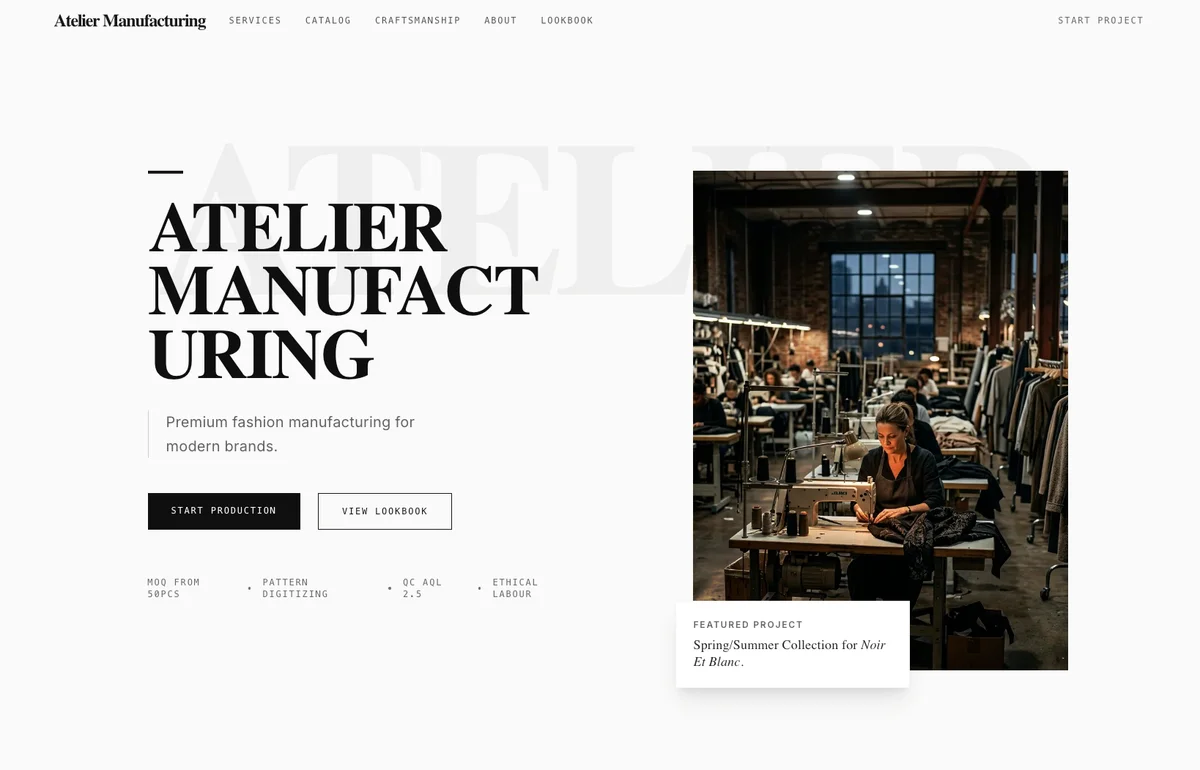
A garment factory's reputation travels through samples and referrals, but the decision to request a sample starts on the website. The Atelier Fashion template is built for manufacturers ready to compete for local brand clients and export-scale buyers: a portfolio-forward design that puts stitching detail and finishing quality front and center, backed by the technical detail on MOQ, fabric sourcing, and sampling timeline that turns interest into a quote request.
Who This Is For
Atelier-scale bespoke fashion houses and custom tailoring studios serving clients commissioning made-to-measure dresses, suits, occasion wear, and limited-edition pieces. The template is built for ateliers whose current offering spans private fittings, custom design consultation, and small-batch production for individual clients and capsule collections. Competition spans luxury boutiques offering ready-to-wear at custom price points as well as independent tailors operating without a digital presence. Positioning is anchored in craftsmanship and personal customization rather than brand recognition or wholesale scale. Market context: the premium fashion segment in Indonesia is expanding as affluent clients seek alternatives to global luxury labels and want pieces fitted to their measurements and styled to their occasions, where the buyer who lands on the site has already decided they want bespoke and is evaluating which atelier can match their vision before booking a first fitting.
What This Template Covers
- Production Portfolio and Lookbook: Finished garment photography sized for stitch-level inspection, not compressed thumbnails, organized to show the range of product types and quality tiers the factory can produce.
- Capabilities and Technical Specs: Product categories, monthly capacity, MOQ by type, available fabric sourcing, and equipment. Structured so a brand buyer can run a technical pre-qualification without a conversation.
- CMT-to-Full-Package Services: The scope of each service tier (cut-make-trim, full package, private label) with what's included and what the buyer provides, so expectations are aligned before sampling begins.
- Craftsmanship and QC Process: The production flow from pattern making through sampling, in-line quality control, final inspection, and delivery. Shows a brand client what they can hold the factory accountable to at each stage.
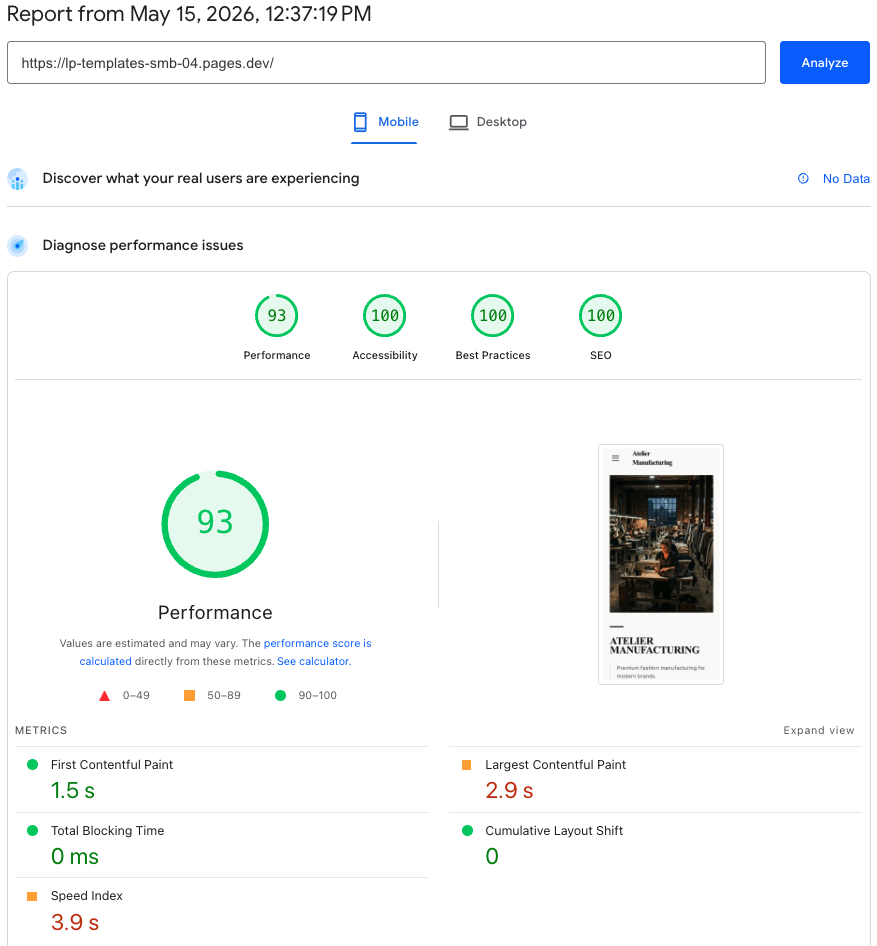
- Zero Runtime JavaScript: Built with Astro, deployed on Cloudflare's global edge. The full lookbook and production portfolio render in under 800ms with nothing executing in the browser. That's why Core Web Vitals hits 96/99 on both mobile and desktop.
Full Site Architecture: 7 Pages
Seven pages built around the atelier's natural sales process: browse the lookbook, understand customization options, review past work in the portfolio, then initiate an order. The craftsmanship page sits between discovery and purchase. It's the trust layer that makes the price feel justified before anyone asks.
fashion-manufacturer/
├── /                           HOME
│   ├── [Hero]   Custom apparel manufacturing + Quote CTA
│   ├── [§]      Production portfolio highlights
│   ├── [§]      Capabilities: MOQ · Lead time · Fabric types
│   ├── [§]      Lookbook preview
│   └── [CTA]    Request a Quote / WhatsApp
│
├── /catalog                    PRODUCT CATALOG
│   [§] Apparel · Activewear · Accessories: specs & minimums
│
├── /lookbook                   LOOKBOOK
│   [§] Fashion photography of completed productions
│
├── /services                   SERVICES
│   [§] CMT · Full Package · Private Label: scope & pricing
│
├── /craftsmanship              CRAFTSMANSHIP & PROCESS
│   [§] Production steps · QC standards · Factory story
│
├── /about                      ABOUT THE FACTORY
│   [§] Production capacity · Certifications · Team
│
└── /contact                    QUOTE REQUEST
    [Form] Product type · Quantity · Fabric · Timeline
─────────────────────────────────────────────────────────────────
[Hero] lead section  ·  [§] content section  ·  [CTA] conversion point
catalog · lookbook · services · craftsmanship · quote form
Independent Verification
Both reports were captured on the live site, not a staging environment. Click either image to run a fresh scan yourself.
Google's public tool for measuring real-world web performance. It scores pages across Performance, Accessibility, Best Practices, and SEO. Each category is scored out of 100. A score of 90+ is considered good. This site scored 96 on mobile and 99 on desktop.
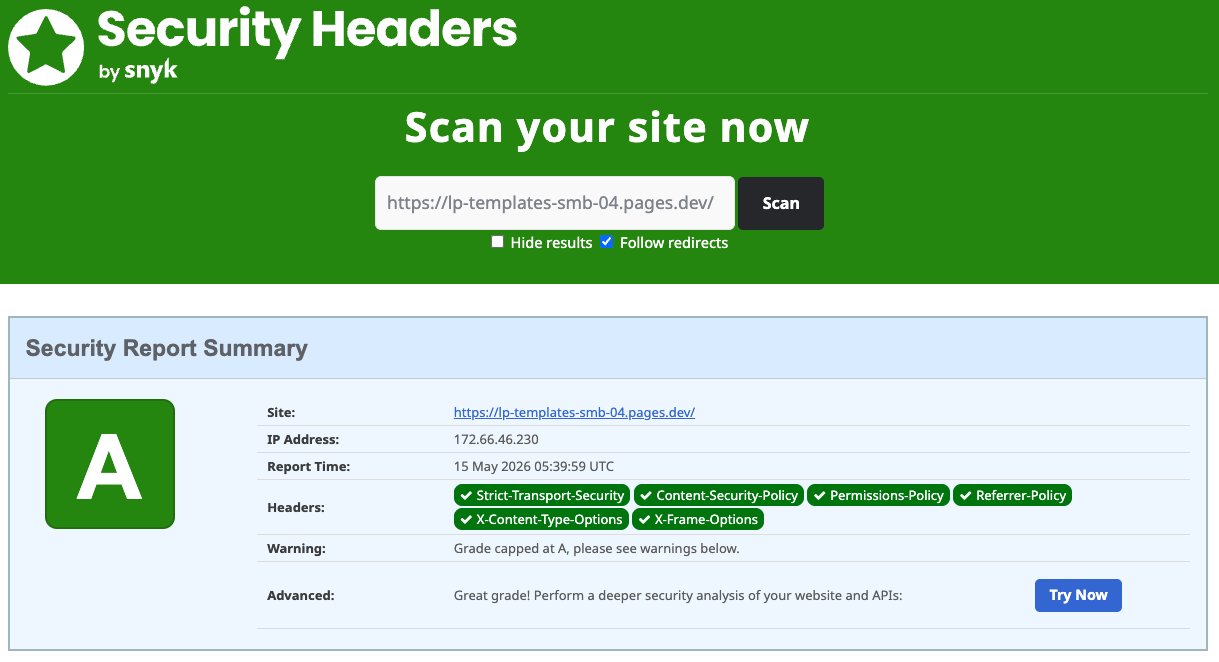
An independent scanner that checks which HTTP security headers a site has configured. Headers like CSP, HSTS, and X-Frame-Options protect visitors from common web attacks. Grade A means all major headers are present and correctly set.
How to Evaluate the Demo
- Portfolio photography: Zoom into the stitch photos. Can you judge seam finish and fabric hand from the screen, or do the images compress below the detail level a professional buyer needs to make a decision?
- MOQ and fabric sourcing: Within two pages, can a brand buyer confirm whether the factory's minimums and available fabrics match their product? That's the first filter every sourcing manager applies.
- Sampling timeline: Does the craftsmanship or process page make the path from tech pack to first sample clear, including a realistic week count? Vague timelines push buyers to ask elsewhere.
- Quote request form: Does the form capture product type, quantity, fabric preference, and target delivery date, or does it ask for an open-ended message that your team has to follow up to qualify?
- Accessibility: Open PageSpeed Insights on the demo. Headings, contrast ratios, alt text, and keyboard navigation all pass automated accessibility checks.
- Security: Run the SecurityHeaders.com scan above. Grade A means every visitor is protected by the full set of HTTP security headers: CSP, HSTS, X-Frame-Options, and more.
"A buyer who has never visited your facility makes their first judgment from your photography. Give them stitch-level detail, clear MOQ, and an honest sampling timeline, and the first call is already halfway to a purchase order."